Masdevallia klabochorum
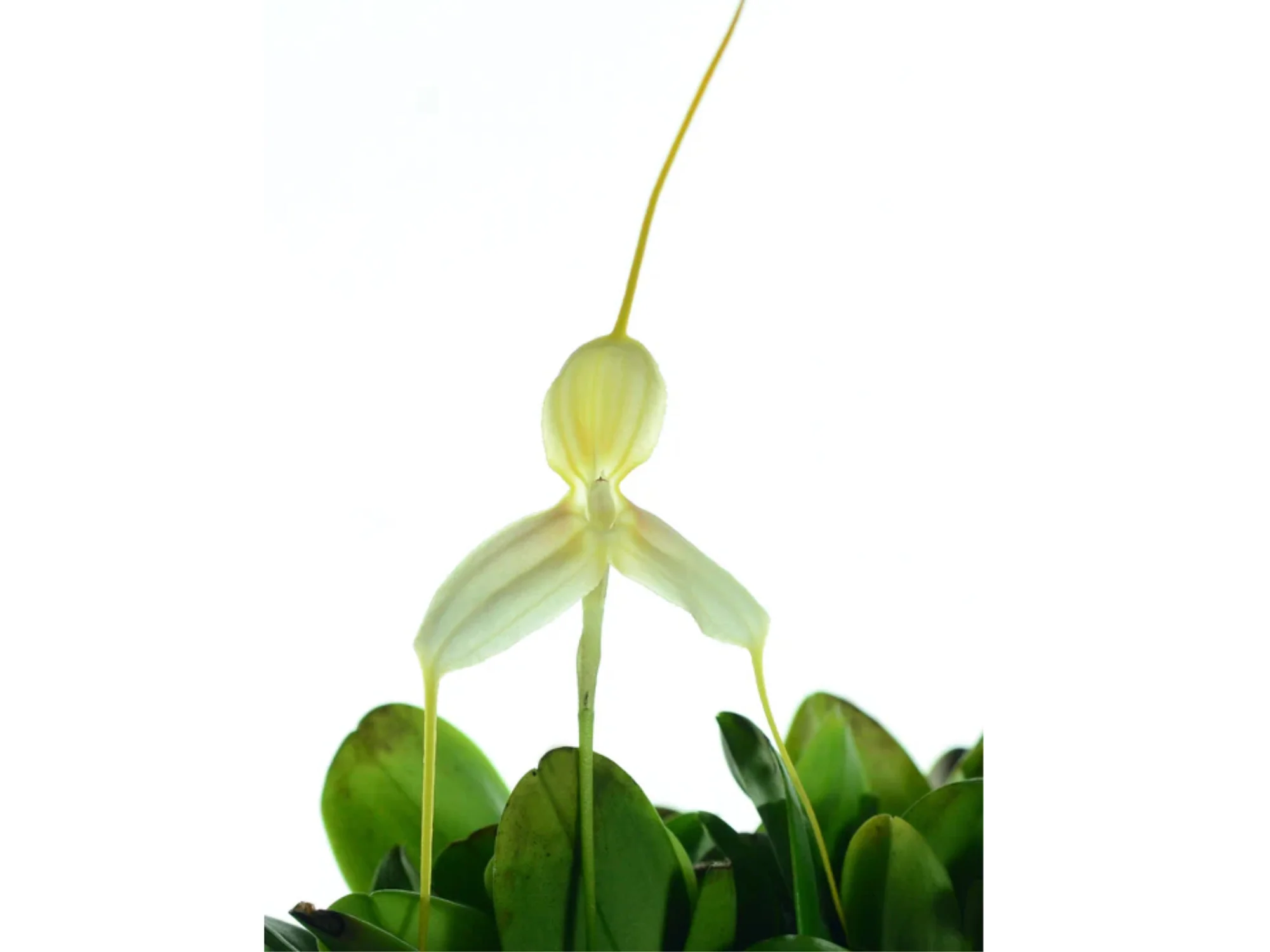
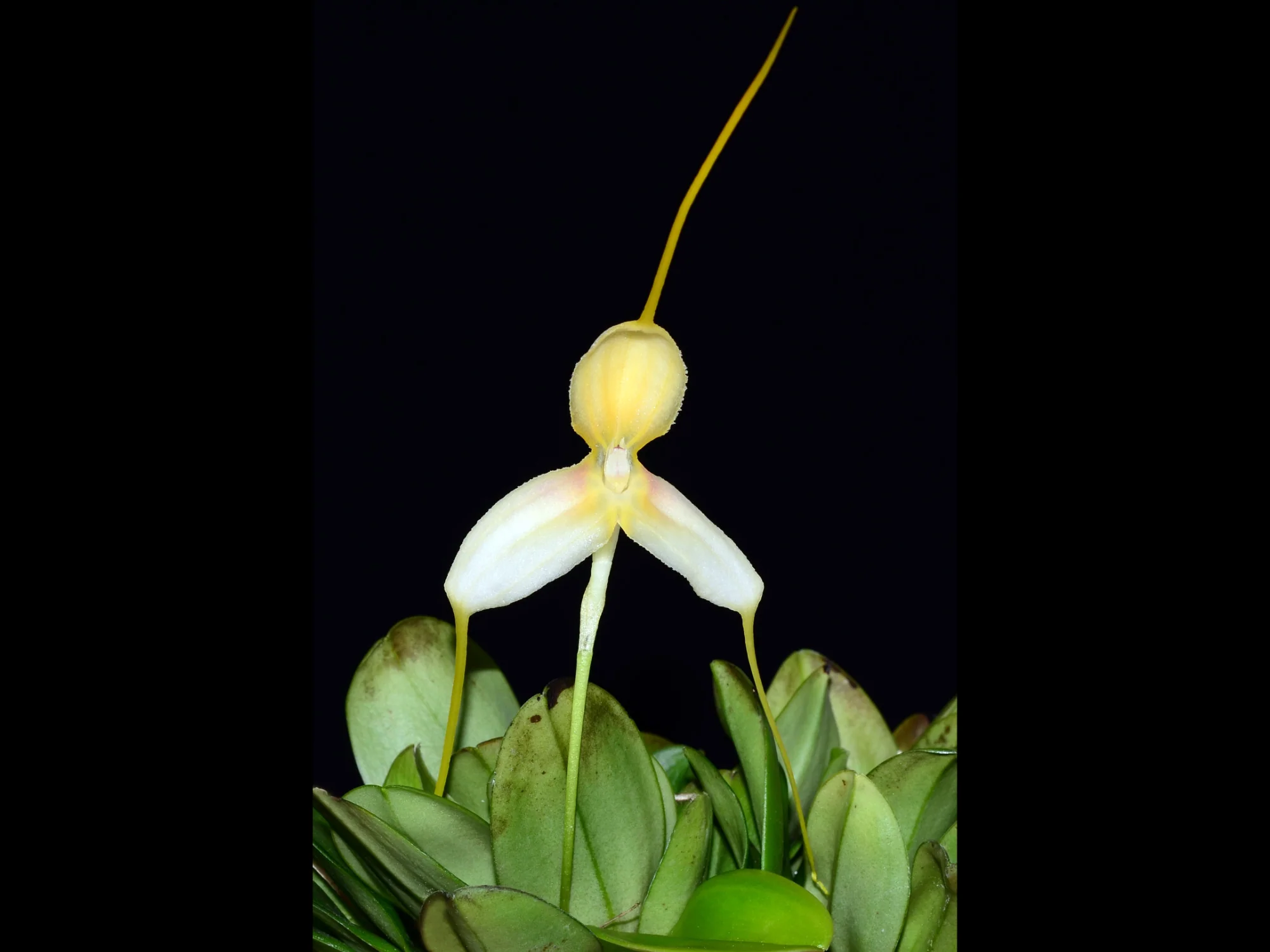
A fascinating miniature species with a highly distinctive flower structure — the inflated, globose dorsal sepal forms a prominent hood topped by a single long, erect tail, while the small lateral sepals spread openly below, creating an unmistakable silhouette carried on a slender upright inflorescence.
- Light: Grow under 50–70% shade cloth; direct sun causes rapid leaf scorch and must be avoided.
- Temperature: Cool grower. Daytime 57–68°F (14–20°C), nights 45–54°F (7–12°C). A consistent day-night differential supports vigorous growth and reliable blooming.
- Humidity: Requires 75–90% relative humidity; humidity trays or a humidifier with steady air movement keep conditions optimal.
- Watering: Maintain even moisture year-round; mounted plants need more frequent watering than potted ones, with a modest reduction during the coolest months.
Additional Notes
Native to Ecuador, Colombia and Peru at elevations of 1,800–3,000 meters in cool cloud-forest habitats, named in honor of the Klaboch family. Best cultivated in small pots with fine bark or sphagnum moss, or mounted on cork bark or tree fern.
Description
A fascinating miniature species with a highly distinctive flower structure — the inflated, globose dorsal sepal forms a prominent hood topped by a single long, erect tail, while the small lateral sepals spread openly below, creating an unmistakable silhouette carried on a slender upright inflorescence.
- Light: Grow under 50–70% shade cloth; direct sun causes rapid leaf scorch and must be avoided.
- Temperature: Cool grower. Daytime 57–68°F (14–20°C), nights 45–54°F (7–12°C). A consistent day-night differential supports vigorous growth and reliable blooming.
- Humidity: Requires 75–90% relative humidity; humidity trays or a humidifier with steady air movement keep conditions optimal.
- Watering: Maintain even moisture year-round; mounted plants need more frequent watering than potted ones, with a modest reduction during the coolest months.
Additional Notes
Native to Ecuador, Colombia and Peru at elevations of 1,800–3,000 meters in cool cloud-forest habitats, named in honor of the Klaboch family. Best cultivated in small pots with fine bark or sphagnum moss, or mounted on cork bark or tree fern.